
Dream On. Directing in a New Medium
The Dawn of a New Era
About a year ago, I wrote about storytelling with generative AI from the outside looking in—analyzing emerging work and the rapid evolution of the tools.
Since then, AI development—across models, platforms, and workflows—has accelerated dramatically, creating a new medium of expression. What felt experimental a year ago is now a viable platform for brand storytelling.
A few months ago, I stepped into this medium as a hands-on director.
My goal was simple: push current AI tools toward cinematic realism—testing their capabilities and limits while applying the language of filmmaking to an entirely new workflow.
Dream On
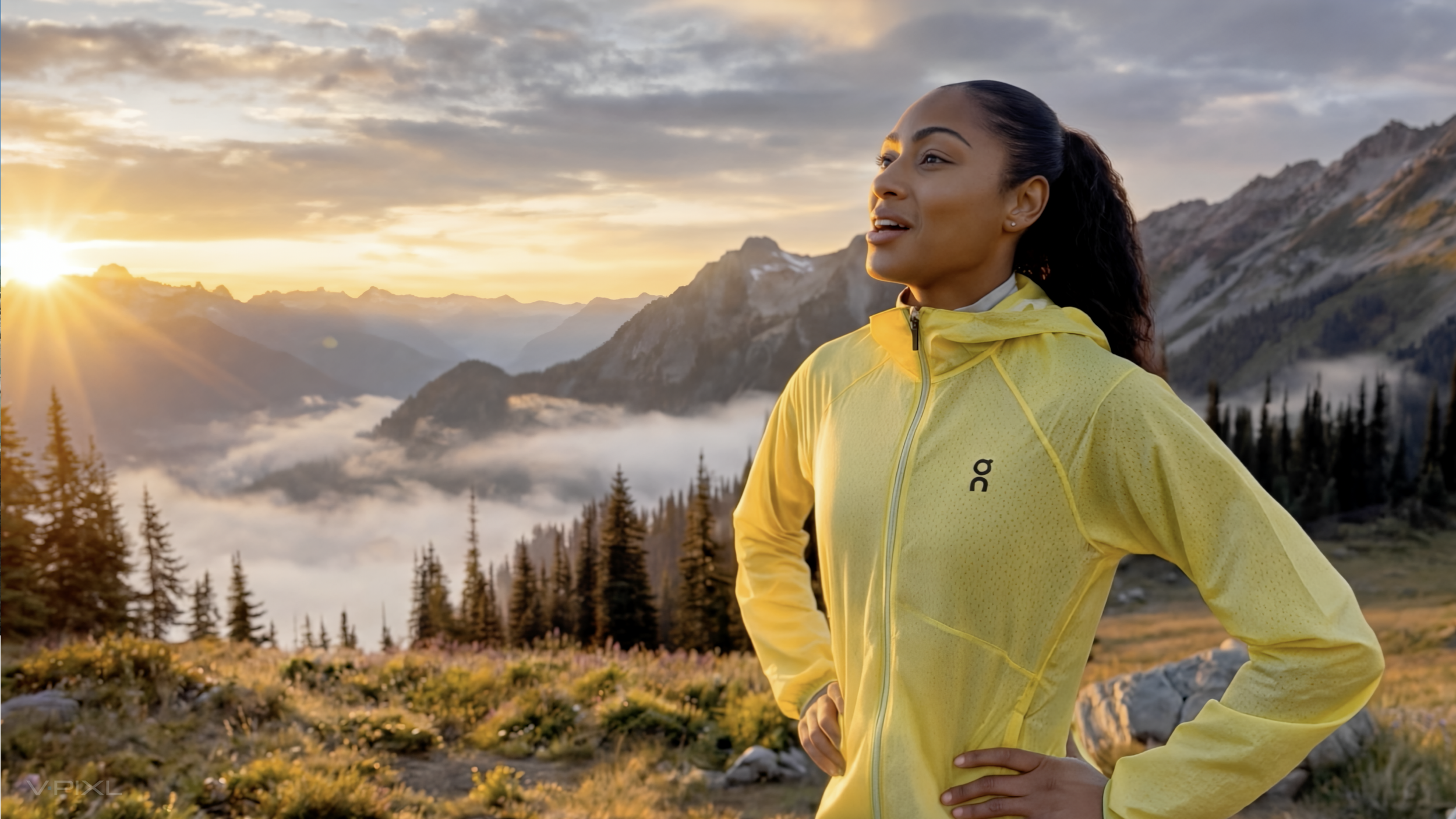
I chose what I knew would be a challenge: creating a spec piece for On Sportswear—an inspirational brand rooted in innovation, performance, and design.
On was born in the Swiss Alps by a former elite Ironman and trail runner with a simple idea: create footwear that feels like running on clouds. Their mission is to ignite the human spirit through movement.
At the core of the brand is the belief that movement unlocks something deeper—what athletes describe as flow—a state where action and awareness blur, and instinct takes over. A mindset that feels almost dreamlike—where we push beyond perceived limits and move closer to our goals.
I decided to explore that idea through the inner voice of a female trail runner on a morning run in the North Cascades—using the brand’s call-to-action, “Dream On” as the narrative spine.
As an experienced backpacker, I wanted to capture the beauty and ruggedness of the alpine environment while grounding the story in the brand’s ethos.
My goal was photorealism.
And that’s where things got interesting.
Chasing the Dream
What stood out immediately was how powerful these tools already are for creating mood, landscape, and atmosphere. Most of the more controlled moments came remarkably close to what I imagined, while some exceeded expectations.
Brand fidelity and fast-motion sequences, however, pushed current models to their limits—particularly in maintaining temporal consistency for high-speed running shots, facial coherence, and detailed brand elements in motion.
For a director, that introduced a new layer of creative problem-solving: how do you design shots, movement, and editorial structure to protect what matters—while still creating something that feels dynamic and cinematic?
Today, that means designing within the strengths of the medium, adapting when things break, and using editorial instincts to shape the final result.
It’s a different process—but still very much a directing process.
Just the Beginning
What this experience made clear is that AI generated video has become a new creative medium with its own strengths, limitations, language, and possibilities.
For the first time, we can visualize ideas without the physical constraints of production—locations, weather, time, logistics, or cost. Ideas that would have been impractical—or impossible—to produce can now be explored and brought to life quickly.
That fundamentally changes the nature of commercial storytelling.
AI is particularly well-suited for concept-driven campaigns, stylized brand storytelling, and short-form content that leans into imagination over realism.
Traditional filmmaking, however, remains unmatched in its ability to capture human performance, emotion, and real-world nuance.
These aren’t competing approaches. They’re different creative domains. AI expands imagination. Traditional filmmaking anchors it in human experience.
In some cases, AI will replace traditional production. In others, it will extend it. And in many, the most interesting work will come from combining both.
For me, this project was more than an exploration—it was a clear signal of where things are heading.
The gap between intent and execution is closing—fast.
The creative canvas has changed—forever.
What hasn’t changed is the role of story—and the importance of direction.
At V-PIXL, we’re leaning into both—pushing AI-driven storytelling forward while continuing to create work rooted in traditional and virtual production.
Because the future isn’t one or the other.
It’s knowing how to use each medium to its full potential.
